AI meets Glasgow's Trees
supported by GALLANT Innovation Fund
Collaboration with HK PolyU · 27 July 2026
Our conversations with Prof Charles Wong’s research team at The Hong Kong Polytechnic University (HK PolyU) during the ISPRS Congress 2026 revealed shared research interests in urban forestry and vegetation studies.
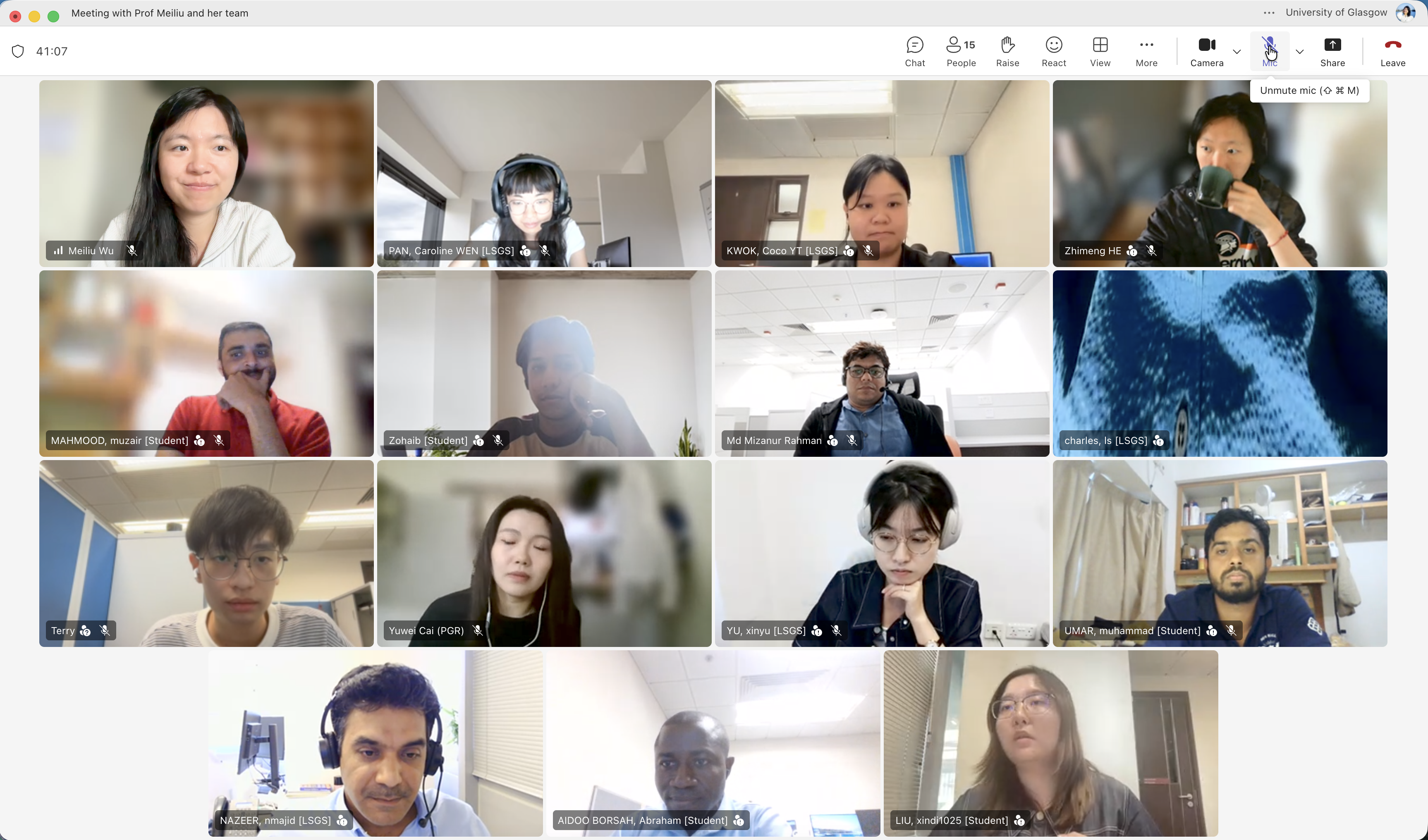
On 27 July 2026, we met on Microsoft Teams to begin a collaboration exploring 3D LiDAR and remote sensing techniques for urban forestry and vegetation studies. We look forward to developing these ideas together through AI meets Glasgow’s Trees.
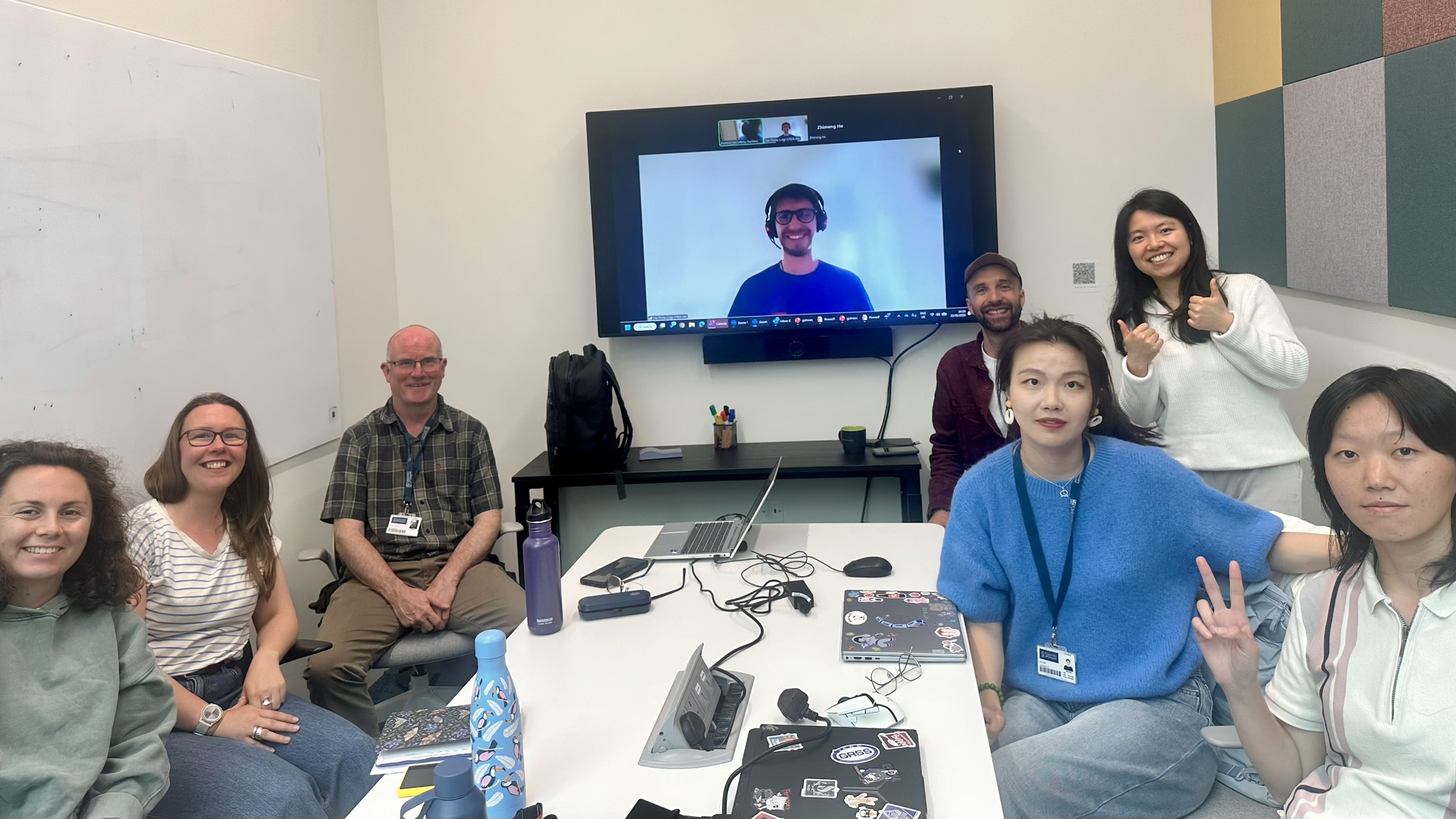
Our project team
A group meeting for AI meets Glasgow’s Trees, bringing the team together in person and online to discuss our work on urban trees and ecosystem services.
AI Meets Glasgow’s Trees: Metrics Prediction, 3D Mapping, and Socio-Ecosystem Impact Simulations
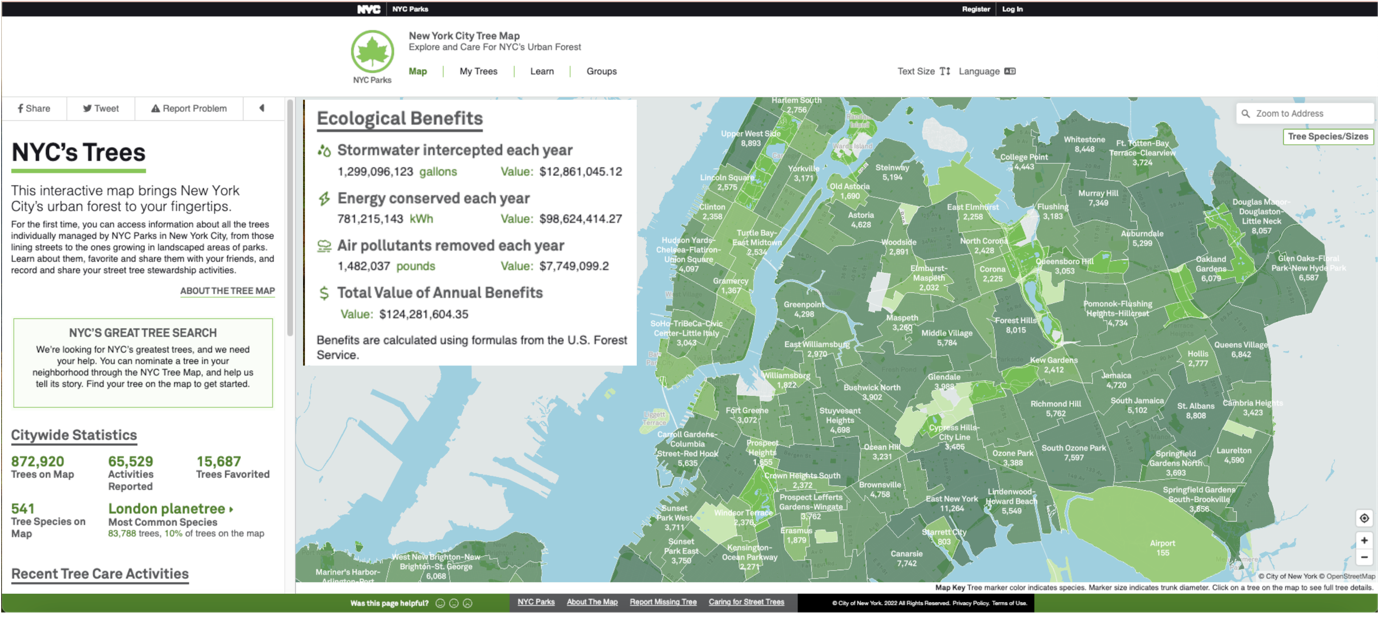
The project aims to harness the power of AI to advance sustainable forestry and woodland management in Glasgow, focusing on predicting tree metrics (e.g., species, height, canopy area, and tree health), creating a detailed and interactive 3D tree map, and assessing tree impacts on socio-ecosystem. This research will combine cutting-edge deep learning techniques and statistical inference with diverse data sources, including high-resolution LiDAR data, remote sensing imagery, street view images, environmental sensor data, citizen-science text, and social media. By leveraging exascale GPU computing, the project will develop scalable, real-time models and tools to support sustainable urban planning, biodiversity conservation, and climate resilience efforts.
The project will comprise two steps: (1) AI-powered predicting tree metrics, and developing 3D visualisation of Glasgow’s forestry and woodland; and (2) socio-ecosystem simulations to evaluate trees’ impacts on biodiversity, climate mitigation, and human well-being. These components will enable researchers, city planners, and policymakers to make data-driven decisions for a greener, more sustainable Glasgow.